
Subscribe to our newsletter


Karen Russell is the author of six books of fiction, including the New York Times bestsellers Swamplandia! and Vampires in the Lemon Grove. She is a MacArthur Fellow, a Guggenheim Fellow, and a finalist for the Pulitzer Prize. More about this author >
The Antidote opens on Black Sunday, as a historic dust storm ravages the fictional town of Uz, Nebraska. But Uz is already collapsing—not just under the weight of the Great Depression and the dust bowl drought but beneath its own violent histories. The Antidote follows a “Prairie Witch,” whose body serves as a bank vault for peoples’ memories and secrets; a Polish wheat farmer who learns how quickly a hoarded blessing can become a curse; his orphan niece, a basketball star and witch’s apprentice in furious flight from her grief; a voluble scarecrow; and a New Deal photographer whose time-traveling camera threatens to reveal both the town’s secrets and its fate.
Russell’s novel is above all a reckoning with a nation’s forgetting—enacting the settler amnesia and willful omissions passed down from generation to generation, and unearthing not only horrors but shimmering possibilities. The Antidote echoes with urgent warnings for our own climate emergency, challenging readers with a vision of what might have been—and what still could be.
The Antidote by Karen Russell is a mesmerizing meditation on memory that asks us to consider what a nation loses when it chooses to forget, when people refuse to reckon with their own bad deeds—some prosaic, others depraved. In a wildly inventive plot saturated with vivid imagery and striking prose, Russell paints a speculative American past recognizable as our own, save for one bewitching detail: only a few women remember the whole truth.
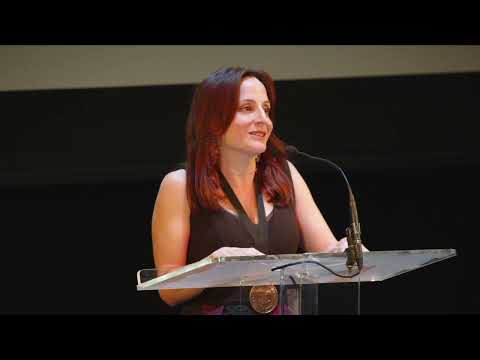
Karen Russell at the 2025 National Book Awards Finalist Reading


